
Looking beyond the job title: mental health in veterinary practice
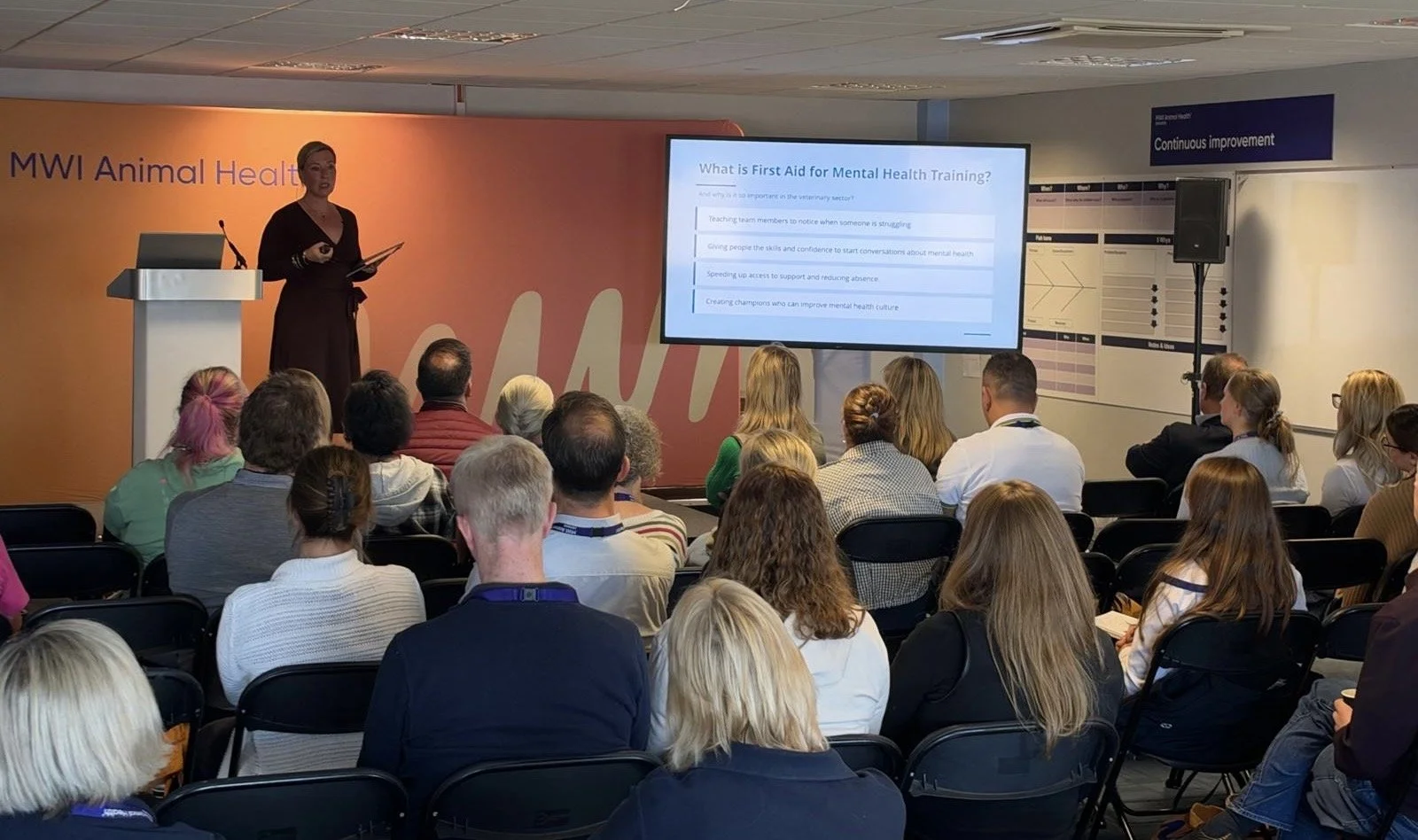
Sarah Knight, Partner/Training Division
Sarah Knight, Trainer and Mental Health Instructor at AB Plus, spoke to independent veterinary practice owners at MWI Animal Health's Community Day about stress and mental health at work, and this post shares the evidence and the practical steps from her talk.
Why does mental health matter so much in veterinary practice?
Because stress is already pushing people towards the exit. In the RCVS 2024 Survey of the Professions, 49% of respondents named stress levels among the top three issues facing the profession, and 54% of vets intending to leave cited chronic stress. Vetlife's helpline had its busiest year on record in 2025, with contacts up 27%.
Clinical load, client emotion and out-of-hours work come with the job, but how prepared and supported people are for them is something a practice can influence.
What is Mental Health First Aid Training?
First Aid for Mental Health Training (MHFAT) teaches team members to notice when a colleague is struggling, start a conversation and signpost them to support. It is not therapy, and it does not involve diagnosing anyone.
It might be the normally chatty nurse who has gone quiet, or the vet who keeps skipping breaks. Many people sense that something is wrong but do not know how to begin, and practice managers often say that, despite an open door, their teams do not come to them. The training gives people the words and a process, and shows how to start the conversation early rather than wait to be approached.
Noticing sooner means support can be offered sooner, which can reduce absence and the pressure on colleagues, and trained first aiders become champions who reduce stigma and build a sense of belonging.
Do managers affect mental health at work?
A great deal: in a global survey by the Workforce Institute at UKG, 69% of employees said their manager has as much impact on their mental health as their partner. This can have both positive and negative connotations, of course!
Managers set pace and workload, how work is done, clarity about roles and how change is handled, which are the areas covered by the HSE Management Standards for work-related stress. A positive culture still belongs to everyone, with owners investing in leadership and training, leaders role modelling the behaviours they want to see, and team members looking out for each other and speaking up early.
The reward for improving mental health culture is better retention, recruitment, reputation and morale.
What can a veterinary practice do today to improve mental health that’s free?
In addition to investing in strong HR and Health & Safety foundations, developing skilled managers and a robust approach to recruitment and onboarding, the following steps cost nothing and could positively change mental health culture;
Ask people how they really are, and wait for the real answer.
Give clarity, offer and seek feedback, and recognise team efforts.
Role model the behaviours you want to see.
Make sure the team know what they are entitled to, including any employee assistance programme and wider benefits.
Put clear signposting for help in common areas, such as the back of toilet doors.
Learn the most common signs of poor mental health, and look for them.
Do the RCVS recommend training Mental Health First Aiders?
Since 1 April 2026 the RCVS has required practices to have a practice-specific suicide prevention plan, which means assessing the risks within the practice and putting measures in place to address them. Team members who can recognise the signs and start a conversation can be a practical part of that plan. It is recommended (but not essential) that practices train their teams in First Aid for Mental Health.
How can AB Plus help?
To talk about mental health training for your practice, contact Sarah at sarah@ab-plus.co.uk or on 07960 430699.
If you work in the veterinary profession and are finding things hard, Vetlife offers confidential support 24 hours a day on 0303 040 2551.